
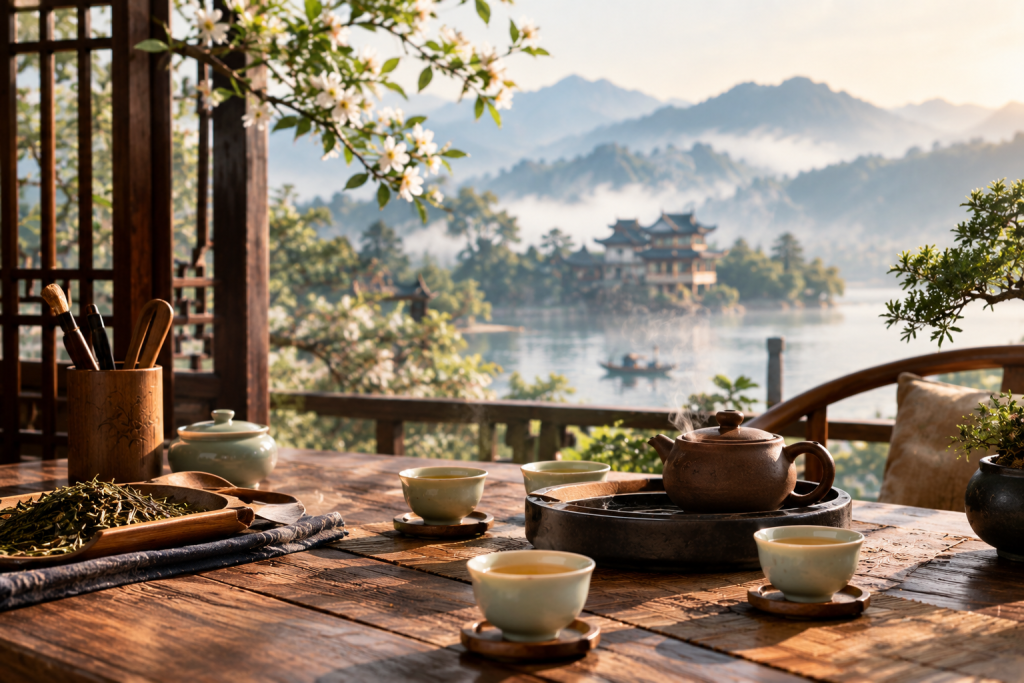
Tea is one of the simplest things in everyday Chinese life.
A pot of tea may sit quietly on a family table. A host may offer a guest a cup when they arrive. Friends may meet over tea and talk for an afternoon. Someone may make tea alone in the evening, turning an ordinary moment into a short pause from a busy day.
This is why Chinese tea culture is about much more than tea itself.
Tea is a drink, but it is also part of social life, hospitality, family traditions, leisure, and everyday routines. It can bring people together, create a moment of quiet, or simply make an ordinary conversation feel more meaningful.
To understand Chinese lifestyle, looking at tea is therefore a good place to begin.
Tea in Everyday Chinese Life
Tea has been part of Chinese life for centuries, but there is no single way that all Chinese people drink it.
Some people enjoy tea at home. Others drink tea at work, in restaurants, tea houses, or while meeting friends. Different regions also have different preferences for tea, preparation methods, flavors, and drinking habits.
For some, tea is a daily necessity.
For others, it is a way to relax.
For some people, especially tea enthusiasts, preparing tea can become a carefully practiced ritual.
This diversity is important because traditional Chinese tea culture should not be understood as one fixed ceremony followed by everyone.
Tea is woven into life in many different ways.
Why Do Chinese People Drink Tea?
There are many reasons people drink tea.
Tea can be refreshing, especially during a long day. It can accompany meals, conversations, work, reading, or moments of rest.
But tea also has a social role.
Offering tea to a guest is a familiar expression of hospitality. When visitors arrive, a host may offer them tea before beginning a conversation.
The action is simple, but it communicates something important:
You are welcome here.
This is one of the most interesting aspects of Chinese tea culture. The meaning of tea often comes not from the tea itself, but from what happens around it.
Tea and Chinese Hospitality
Chinese hospitality is often expressed through food and drink.
Tea is one of the simplest ways to welcome someone into a home, office, restaurant, or social space.
A host may ask what kind of tea a guest prefers, prepare a pot, and refill the cup during conversation.
There is no need for an elaborate ceremony.
The repeated act of pouring tea creates a natural rhythm for interaction.
Conversation begins.
Tea is poured.
Someone asks a question.
Another cup is offered.
The process continues.
In this sense, Chinese tea and hospitality are closely connected because tea creates space for people to spend time together.
Tea as a Social Experience
Tea is rarely only about drinking.
Imagine two friends sitting around a small table.
There may be no special occasion. They might simply be talking about work, family, travel, or everyday problems.
A pot of tea sits between them.
The tea does not need to be the main subject of the conversation.
It simply creates the setting.
This is one reason tea has remained relevant in modern Chinese life. It does not require a special occasion.
Coffee shops may provide a similar social function in many places around the world, but traditional and modern tea spaces have their own character in China.
Tea can turn an ordinary meeting into a slower and more relaxed experience.
Tea and Family Life
Tea can also be part of family life.
Older generations may have their preferred teas and preparation methods, while younger family members may prefer different flavors or modern tea drinks.
Parents and grandparents may introduce children to tea gradually, teaching them how to hold a cup, pour water, or recognize different types of tea.
These small interactions can become a form of cultural transmission.
Not every family follows the same traditions, but tea can provide a simple connection between generations.
A cup of tea may therefore carry memories of a person’s home, grandparents, hometown, or childhood.
Tea and the Rhythm of Time
Modern life is increasingly fast.
People work, travel, communicate, and consume information at a remarkable speed.
Tea offers a different rhythm.
Water needs to be heated.
Tea needs to be prepared.
The leaves need time to release their flavor.
Then the tea is slowly enjoyed.
None of these steps has to take very long, but they create a small interruption in the rhythm of everyday life.
This is one reason tea fits naturally into the idea of Chinese lifestyle.
Tea does not necessarily ask people to stop everything.
Instead, it creates a small space within the day.
A few minutes with tea can become a moment to talk, think, read, or simply sit quietly.
Tea and the Chinese Idea of Leisure
Leisure in traditional Chinese life has often been connected with simple activities.
Drinking tea, appreciating nature, reading, listening to music, writing calligraphy, painting, or talking with friends could all become forms of cultivated leisure.
Tea was particularly suitable for this kind of life because it could be enjoyed almost anywhere.
A scholar might drink tea while reading.
Friends might drink tea while discussing poetry.
A traveler might enjoy tea while looking at a mountain landscape.
A family might drink tea after a meal.
The setting could change, but the basic idea remained simple: create a moment to enjoy life rather than constantly pursue productivity.
This connection between tea and leisure continues today, even though the forms have changed.
Tea Houses and Social Life
Chinese tea houses have historically provided another important environment for drinking tea.
A tea house can be more than a place to purchase a beverage.
It can be a place to meet friends, conduct conversations, watch performances, play games, or simply spend time.
Different periods and regions developed different tea-house traditions, so there is no single model of what a Chinese tea house should look like.
Modern tea houses range from traditional spaces filled with wooden furniture and porcelain teaware to contemporary establishments with minimalist interiors.
The common element is the social experience.
Tea provides a reason to sit down and stay for a while.
Tea and Food
Tea is also closely connected with Chinese dining.
Tea may be served before or during a meal, and different teas can complement different foods.
In restaurants, a pot of tea may already be waiting when guests sit down.
This is another example of how tea becomes part of everyday life without demanding special attention.
People may be focused on food and conversation while the tea quietly remains part of the table.
This relationship between Chinese tea and food culture is especially useful for understanding Chinese dining traditions.
Food brings people together.
Tea helps sustain the gathering.
Different Teas, Different Experiences
China is home to many famous tea traditions.
The commonly recognized major categories include:
green tea
black tea
oolong tea
white tea
yellow tea
dark tea
Each category has different production methods, flavors, aromas, and regional traditions.
Famous examples include Longjing green tea, Tieguanyin oolong tea, Wuyi rock tea, and Pu-erh tea.
However, tea preferences are highly personal.
Someone who enjoys a fresh and delicate green tea may not enjoy a rich and aged tea.
Someone who prefers a strong aroma may choose a different style altogether.
There is no single “Chinese tea” that represents everyone.
This variety is part of the richness of Chinese tea culture.
Tea and the Tea Table
The objects surrounding tea can also become part of the experience.
A traditional tea table may include a teapot, cups, a tray, a kettle, a tea pitcher, and other utensils.
The materials can vary from porcelain and ceramic to glass, bamboo, wood, and stone.
This is where tea connects naturally with Chinese art and craft.
A beautiful teapot is not simply a container.
Its shape, material, texture, craftsmanship, and relationship with the tea can all influence the experience.
This is particularly visible in traditions such as Yixing purple clay teapots and Chinese porcelain tea ware.
The object and the drink become part of the same experience.
Tea and Nature
Traditional Chinese appreciation of tea is also closely connected with nature.
Tea grows in landscapes shaped by mountains, rainfall, soil, climate, and seasons.
Many famous tea-producing regions are associated with mountain environments.
This relationship between tea and landscape has influenced Chinese poetry, painting, literature, and everyday imagination.
A cup of tea can therefore connect two very different experiences:
the physical experience of drinking,
and the landscape from which the tea originated.
For many tea lovers, knowing where a tea comes from adds another layer to the experience.
Traditional Tea Culture in Modern China
Modern Chinese life is very different from life centuries ago.
People live in large cities, work with smartphones and computers, travel frequently, and have increasingly diverse lifestyles.
Yet tea has adapted rather than disappeared.
Traditional tea houses exist alongside modern cafés.
Loose-leaf tea is sold alongside bottled tea and modern tea beverages.
Young people may drink tea in ways that previous generations would not have imagined.
This does not necessarily mean that traditional tea culture has been replaced.
Instead, it continues to change.
Tradition survives partly because it can adapt to new circumstances.
Tea Is Not Always a Ceremony
One common misunderstanding about traditional Chinese tea culture is that drinking tea must always involve a formal ceremony.
In reality, everyday tea drinking can be extremely simple.
A person may put some tea leaves into a cup, add hot water, wait briefly, and drink.
There may be no special teapot, no formal movements, and no elaborate rules.
This distinction between formal tea practice and ordinary tea drinking is important.
The cultural meaning of tea does not depend entirely on ceremony.
Sometimes, tea is simply part of life.
What Tea Reveals About Chinese Lifestyle
Tea offers a small but revealing window into Chinese everyday life.
It shows the importance of hospitality.
It creates opportunities for social interaction.
It connects generations.
It can turn leisure into a meaningful experience.
It brings craftsmanship to the dining table.
It connects people with landscapes and seasons.
And perhaps most importantly, it creates time.
In a busy world, sitting down with a cup of tea can be a reminder that not every moment needs to be rushed.
More Than Just a Drink
The story of Chinese tea culture is ultimately not just the story of a beverage.
It is a story about how ordinary objects become part of human relationships.
A teapot can become a family object.
A tea house can become a meeting place.
A cup of tea can become an invitation.
A tea table can become a place for conversation.
And a few quiet minutes with tea can become a way to experience the present moment.
This is why tea remains such an important part of Chinese lifestyle.
You do not always need to understand every rule of tea preparation to understand its meaning.
Sometimes, all you need to do is sit down, pour a cup, and give yourself a little more time.