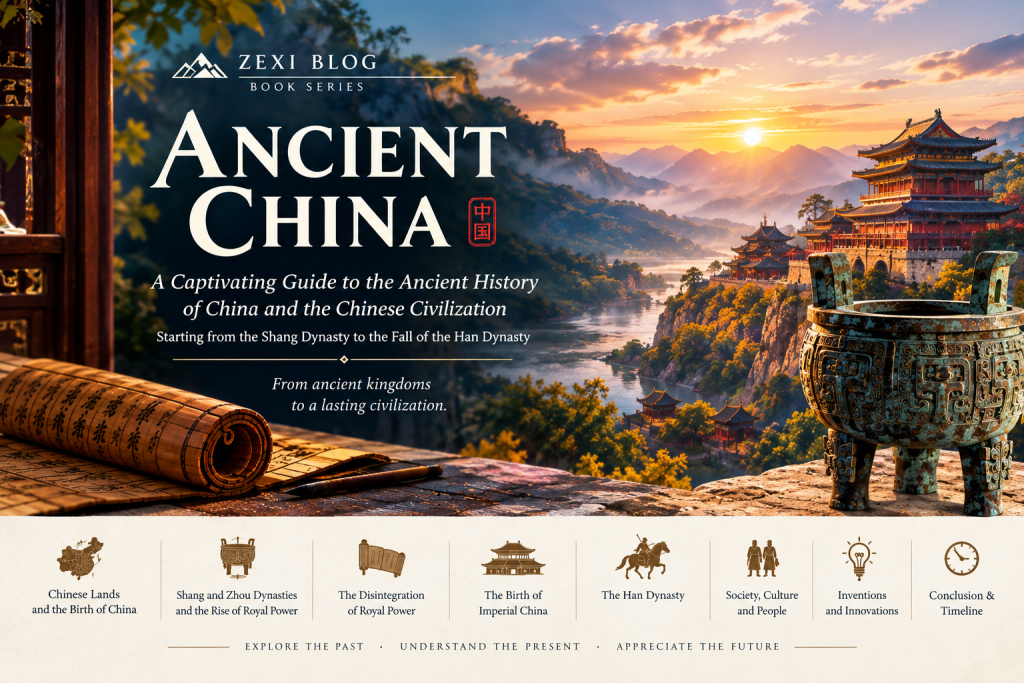
Ideas, Society, and Achievements
Ancient China was more than a succession of dynasties. It was also a place where people debated how to live and govern. Confucius emphasized ethical conduct, education, and social responsibility. Daoist traditions explored the Dao and humanity’s relationship with nature, while other thinkers focused on law, order, and the practical exercise of political power.
These ideas developed in particular historical settings and were interpreted differently over time. Together, they formed an important part of the intellectual heritage of Chinese civilization.
Everyday life was equally important. Most people depended on agriculture, while craftspeople, merchants, officials, and soldiers contributed to the wider economy and state. Family relationships, ritual practices, and local customs shaped communities, though experiences varied across regions and social positions.
Ancient Chinese achievements also included advances in bronze casting, ironworking, engineering, writing, and other fields of knowledge. These developments were the result of accumulated skill and experience, passed between generations and adapted to changing needs.